Last updated: November 15, 2026
A day trip from Toronto to Niagara Falls is easy to do: the Canadian side of the falls is about 130 km from downtown, roughly 90 minutes by car in light traffic, and you can also get there by GO train, GO bus or a guided tour. Plan on 8 to 12 hours door to door, with 4 to 6 hours at the falls.
Quick facts
- Distance: about 127 km from the CN Tower to the falls (roughly 80 miles)
- Drive time: about 1.5 hours; it can double at rush hour or on busy weekends
- Transit: GO train or GO bus from Union Station to Niagara Falls GO, 4267 Bridge Street, then the WEGO bus
- Getting around at the falls: WEGO bus, year-round; 24-hour pass $16 adult, $12 child (3 to 12), tax included
- Free to see: the falls themselves, the Niagara Parkway and Queen Victoria Park
- Boat tour: Niagara City Cruises, seasonal (2026 season opened May 1); $47.95 adult, $32.95 child, plus HST
- Open year-round: Journey Behind the Falls and the Niagara Parks Power Station
- Winter lights: Winter Festival of Lights, November 14, 2026 to January 10, 2027, free
Is Niagara Falls worth a day trip from Toronto?
For most first-time visitors, yes. The falls are close enough that you can leave Toronto after breakfast, spend an afternoon at the brink of the Horseshoe Falls and be back downtown for a late dinner. The main viewing areas along the Niagara Parkway are free and open all year, so even a low-cost visit gives you the core experience.
A day trip works best with two or three paid attractions; if you want to add Niagara-on-the-Lake and an evening light show, consider staying overnight. If you are still deciding how to fit Niagara into a longer stay, our guide to how many days to spend in Toronto shows where a day trip fits best, and our 3 days in Toronto itinerary already sets aside a day for it.
How to get from Toronto to Niagara Falls
By car
Driving gives you the most flexibility. The usual route is the Gardiner Expressway west to the QEW, then the QEW around Lake Ontario toward Niagara Falls. Niagara Falls Tourism puts the drive at around an hour and a half, but notes it can take twice as long during rush hour or on summer and holiday weekends. Avoiding weekday rush hours in both directions makes the biggest difference.
Parking near the falls is paid. Niagara Parks runs several lots: the main Falls Parking lot across from Table Rock Centre (6635 Niagara Parkway) uses variable rates, the Rapidsview lot south of the falls is a flat $10 for the day, and many smaller Parkway lots charge $8 per hour. Rapidsview is a good choice for a full day because the WEGO bus links it with the main sights.
By GO train
GO Transit runs Lakeshore West trains from Union Station to Niagara Falls GO, at 4267 Bridge Street, all year. The station is accessible and has free parking. It sits north of the main tourist area, so most visitors switch to the WEGO bus for the last stretch to the falls.
Train frequency is the thing to check. Niagara trains run only a few times a day, and on September 8, 2026, GO cut some weekday midday and evening Niagara service, including the 9:10 a.m. train from Union. Those changes are expected to last until spring 2027. On weekdays, GO suggests the Route 12 GO bus with connections at Burlington GO to fill the gaps. Before you go, look up the exact departure and return times in GO’s trip planner and plan your day around the last train or bus back.
Pay with a credit or debit card, a PRESTO card or a GO e-ticket. Niagara Parks also sells a GO and WEGO package that combines a round trip from Toronto with WEGO bus access; check the Niagara Parks website for the current price. For more on fares and cards, see our guide to getting around Toronto.
By guided day tour
Many operators run full-day coach and small-group tours from downtown Toronto, often with hotel pickup and a stop in Niagara-on-the-Lake. Compare what is included (boat ticket, lunch, wine tasting), how many hours you actually get at the falls and the cancellation terms, then book directly with the operator. Toronto City Tour does not sell tours or tickets; we only explain the options.
From the airport
If you are landing at Pearson and heading straight to Niagara, the falls are about 125 km from the airport, roughly a 1.5-hour drive. Travellers going into the city first can use our Pearson Airport to downtown guide. For a group or family, a pre-booked licensed car service can make sense for the round trip; confirm the price in writing before you travel.
Getting around Niagara Falls with WEGO
WEGO is the Niagara Falls visitor bus, run with Niagara Parks. It operates year-round, and its two lines meet at Table Rock Centre at the brink of the Horseshoe Falls. Passes cost $16 for an adult and $12 for a child (3 to 12) for 24 hours, or $20 and $16 for 48 hours, tax included; children 2 and under ride free. From May to October the pass also covers a shuttle to Niagara-on-the-Lake.
What to see at Niagara Falls in one day
The falls from the Niagara Parkway (free)
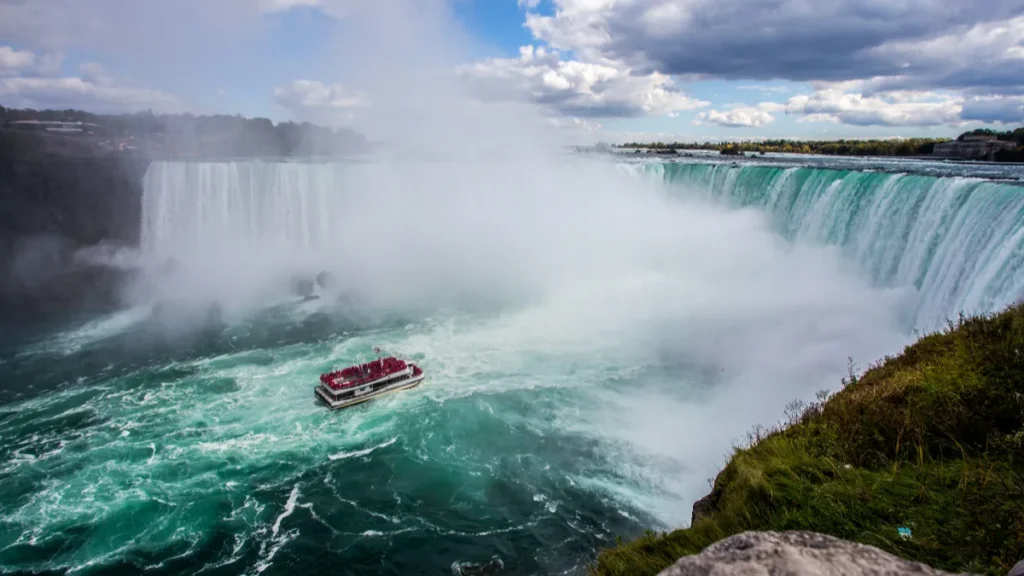
Start at Table Rock Centre, where the railing puts you right beside the edge of the Horseshoe Falls. Then walk north along the Parkway through Queen Victoria Park for views of the American Falls and Bridal Veil Falls. The walk is flat and paved. At night the falls are lit with coloured lights.
Niagara City Cruises (seasonal)
The boat tour takes you into the mist at the base of the Horseshoe Falls. Tickets are $47.95 for adults (13+) and $32.95 for children (3 to 12), plus HST, with a recyclable poncho included. The 2026 season opened May 1. Boats do not sail in winter, so check the operator’s schedule for the date you plan to visit, especially in late fall and early spring. Tickets use timed entry.
Journey Behind the Falls (year-round)
An elevator takes you down to tunnels about 46 metres behind the Horseshoe Falls and to an observation deck at the foot of the falls. Plan on 30 to 45 minutes. Admission is $33 for adults (13+) and $21.50 for children (3 to 12), plus HST; children 2 and under are free. It is the close-up option when the boats are not running.
Niagara Parks Power Station (year-round)
This restored hydroelectric plant at 7005 Niagara Parkway explains how the river was used for power. Its highlight is a 2,200-foot (about 670 m) tunnel that ends on a platform at the base of the falls, about 180 feet (55 m) underground. Regular admission is listed at $33 for adults and $21.50 for children, and a premium tour costs more. Allow about two hours. Access to the tunnel may be limited in bad weather.
White Water Walk (seasonal)
Further north, an elevator drops 70 metres to a boardwalk beside the rapids of the Niagara Gorge. Admission is $21 for adults and $13.50 for children, plus HST. It is closed for the season as of November 2026, so save it for a spring to fall visit.
Sample day trip plan
- 8:00 a.m.: Leave Toronto by car, or take the earliest GO departure that suits you.
- 10:00 a.m.: Park at Rapidsview or arrive at Niagara Falls GO and buy a WEGO pass.
- 10:30 a.m.: Table Rock Centre and the Horseshoe Falls viewpoint.
- 11:30 a.m.: Boat tour (in season) or Journey Behind the Falls.
- 1:00 p.m.: Lunch near Table Rock or on Clifton Hill.
- 2:30 p.m.: Walk the Parkway through Queen Victoria Park to the American Falls viewpoint, or visit the Power Station.
- 4:30 p.m.: Head home before the evening rush, or stay for dinner and see the falls lit up after dark.
Adding Niagara-on-the-Lake
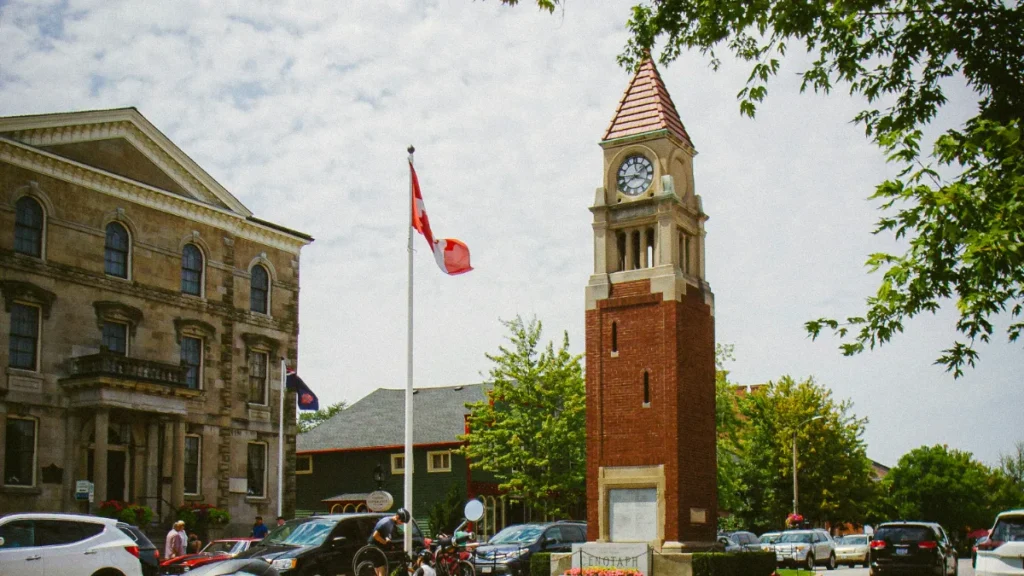
The 56-km Niagara Parkway runs from Fort Erie past the falls to Niagara-on-the-Lake, a small historic town on Lake Ontario known for its tree-lined main street and nearby wineries. If you are driving, you can follow the Parkway north after the falls and stop there on the way back to Toronto. Our Niagara-on-the-Lake day trip guide covers the town, the Shaw Festival and Fort George. Without a car, the WEGO pass covers a seasonal shuttle from May to October. Drivers coming back along the QEW pass Hamilton, where our Hamilton waterfalls day trip guide covers Webster’s Falls, Tew’s Falls and the Devil’s Punchbowl for a separate day out.
Niagara Falls by season
- Spring (April to June): Boats return (May 1 in 2026), gardens bloom and crowds are lighter than in summer.
- Summer (July and August): Every attraction is open and the days are long, but traffic, parking and lineups are at their peak. Go on a weekday if you can.
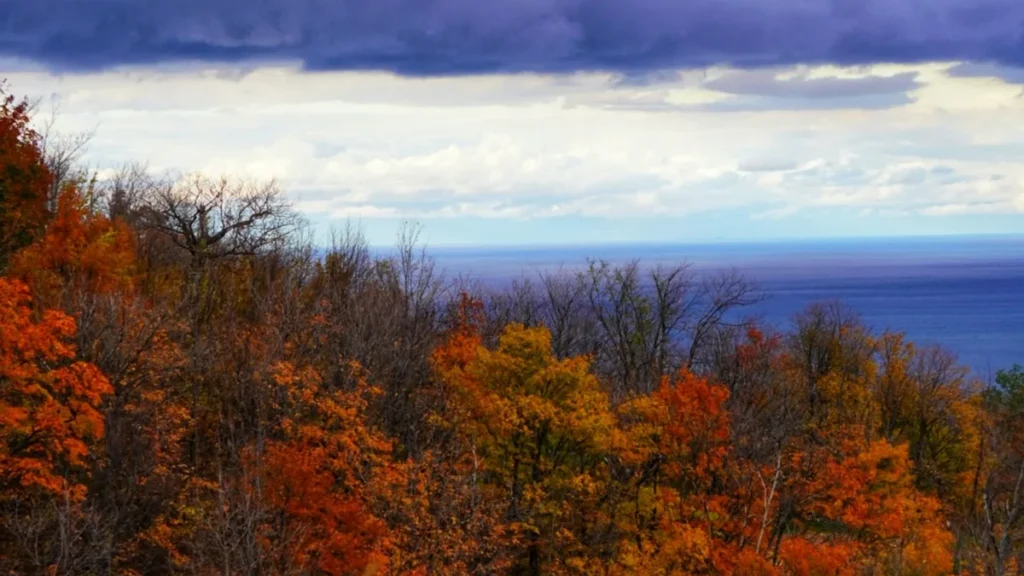
- Fall (September to November): Colourful leaves along the Parkway and quieter weekdays. Some seasonal attractions close as the weather turns.
- Winter (December to March): Cold and sometimes icy, but the mist freezes into ice formations on the rocks and railings. Journey Behind the Falls and the Power Station stay open.
Weather in the region follows Toronto’s closely, so pack for the same conditions you would expect in the city.
Winter Festival of Lights 2026 to 2027
The free Winter Festival of Lights runs from November 14, 2026 to January 10, 2027, with lights on nightly from 5 p.m. to midnight. The route covers more than 8 km of displays along the Niagara Parkway, through Dufferin Islands, the Fallsview area and Clifton Hill. Fireworks over the falls start at 8 p.m. on Fridays and Saturdays from November 14 to December 12, every night from December 18 to January 2, and on January 8 and 9, plus a midnight show on New Year’s Eve. Check your last train or bus home if you stay for the lights.
Practical tips
- Accessibility: Niagara Falls GO station is accessible, and the walkway along the falls is paved and flat. Ask each attraction about elevators and step-free access before buying a ticket.
- Crossing to the United States: the Rainbow Bridge links the two cities, but it is an international border. Bring a valid passport or other accepted travel document, check entry rules for your citizenship and allow time for lineups.
Frequently asked questions
Can you visit Niagara Falls from Toronto without a car?
Yes. Take a GO train or GO bus from Union Station to Niagara Falls GO and use the WEGO bus to reach the falls. Check GO’s trip planner for the current departure and return times, since Niagara trains run only a few times a day.
Is Niagara Falls free to see?
Yes. The viewpoints along the Niagara Parkway and Queen Victoria Park are free. You pay for parking or transit and for attractions such as the boat tour or Journey Behind the Falls.
Is Niagara Falls worth visiting in winter?
It can be. The boats do not run, but Journey Behind the Falls and the Power Station stay open, the ice formations are striking and the free Winter Festival of Lights runs from mid-November to early January.
How much time do you need at Niagara Falls?
Four to six hours covers the main viewpoints and two attractions. Add two to three hours if you also want to visit Niagara-on-the-Lake.
Plan your visit
Decide first how you will get there: drive for flexibility, take GO if you are happy to plan around a few fixed departures, or book a guided tour directly with an operator if you want everything arranged. Pick two or three paid attractions that are open on your date, buy a WEGO pass if you are not driving between sights, and check the weather and your return time before you leave. If you have a few days in the city, pair this trip with our 3-day Toronto itinerary so you spend the rest of your time downtown.