Last updated: November 9, 2026
For a first visit to Toronto, staying downtown between Union Station and Queen Street puts you within walking distance of the CN Tower, the waterfront and the main subway lines. Yorkville and the Annex suit museum lovers and quieter evenings, Old Town and the St. Lawrence area suit food lovers, and Queen West suits travellers who want shops, cafes and nightlife. If you only need a bed near your flight, the airport area is linked to downtown by a 28-minute train.
Below, each area is compared by location, transit and who it suits. Toronto City Tour is an independent guide: we do not sell rooms, tours or tickets, and we do not recommend specific hotels.
Quick facts
- Easiest base for a first visit: downtown core (Financial and Entertainment Districts, near Union Station)
- Quieter, upscale base: Yorkville and the Annex, on subway Lines 1 and 2
- Food-focused base: Old Town and St. Lawrence, near St. Lawrence Market and the Distillery District
- Taxes on rooms: 6% Municipal Accommodation Tax plus 13% HST (HST also applies to the MAT portion)
- Short-term rentals: legal listings in Toronto must show a City registration number (format STR-0000-XXXXXX)
- Airport link: UP Express, about 28 minutes from Pearson to Union Station
How to choose where to stay in Toronto
Toronto is large, but most visitor sights sit in a compact strip between Lake Ontario and Bloor Street. The subway’s Line 1 (Yonge-University) runs in a U shape through that strip, and Line 2 (Bloor-Danforth) crosses it east to west along Bloor. If your hotel is within a few minutes’ walk of either line, you can reach almost every attraction in this guide without a car.
Ask yourself three questions before you book:
- What will you do most? Big sights and games point to downtown. Museums point to Yorkville and the Annex. Food markets point to Old Town.
- Do you want busy or calm evenings? The Entertainment District and Queen West stay lively late. Yorkville, the Annex and Midtown are calmer.
- Are you driving? Downtown hotel parking is usually charged per night and can add a lot to the bill. If you arrive by car, a hotel with included parking near a subway station outside the core can make sense.
For a full picture of fares, the subway, streetcars and the PRESTO card, see our guide to getting around Toronto.
Downtown core: Financial District and Entertainment District
This is the area between Union Station, the waterfront, Spadina Avenue and Queen Street. It holds the largest concentration of hotels in the city and puts the main landmarks within walking distance.
What is nearby
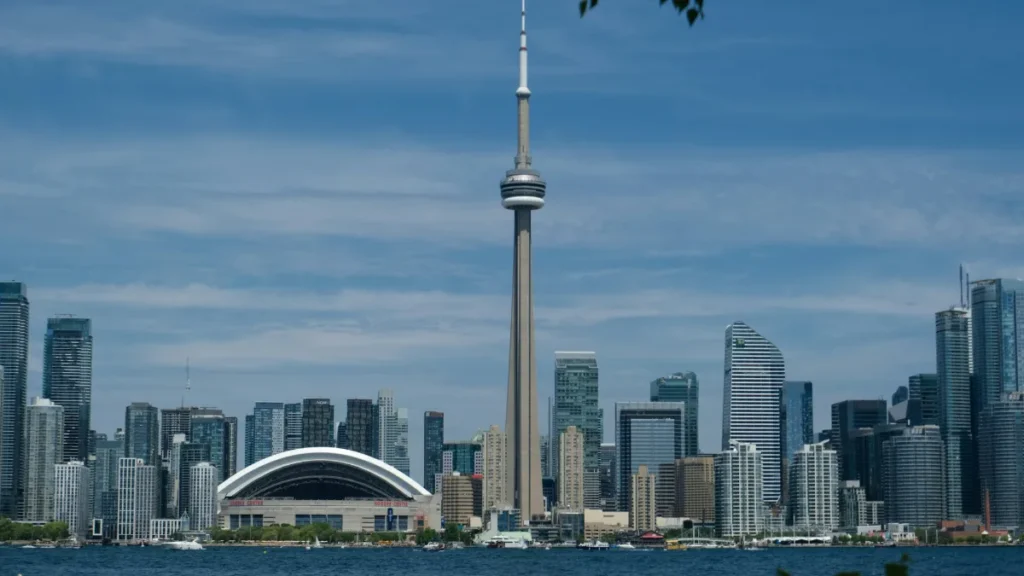
- The CN Tower and Ripley’s Aquarium of Canada, side by side on Bremner Boulevard
- Rogers Centre (Blue Jays baseball) and Scotiabank Arena (Maple Leafs, Raptors and big concerts)
- King Street West’s theatres, restaurants and the TIFF Lightbox cinema
- The PATH, an underground walkway of more than 30 km that links offices, shops and subway stations, useful in winter
Getting around
Union, St. Andrew, King and Osgoode stations on Line 1 serve the area, and the 504 King and 501 Queen streetcars run east and west. Union Station is also where the UP Express from Pearson Airport and GO trains arrive.
Good for
First-time visitors, short trips of one or two days, sports fans and anyone who wants to walk to most sights. The Financial District is quiet at night; the Entertainment District is not.
Keep in mind
Room rates here tend to rise sharply on nights with major games, concerts and festivals, so check the event calendar before you choose dates.
Old Town and St. Lawrence
East of Yonge Street, around Front Street East and King Street East, Old Town is one of the oldest parts of the city. It has a mix of hotels, older brick buildings and a strong food scene.
What is nearby
- St. Lawrence Market at 92-95 Front Street East, a short walk from most hotels in the area
- The Distillery District, a pedestrian-only area of Victorian industrial buildings about 15 to 20 minutes east on foot
- Berczy Park and the Flatiron Building
Getting around
King station on Line 1 is at the western edge. The 504 King streetcar runs along King Street, and Union Station is about a 10-minute walk away.
Good for
Food lovers, couples and visitors who want a walkable base that feels a little calmer than the Entertainment District while staying close to downtown. It also works well in December, when the Distillery Winter Village runs.
Yorkville and Bloor Street
Yorkville sits just north of Bloor Street between Yonge Street and Avenue Road. It is known for high-end shopping on Bloor, galleries, patios and some of the city’s more expensive hotels.
What is nearby
- The Royal Ontario Museum and the Gardiner Museum at Bloor Street and Queen’s Park
- Village of Yorkville Park and the side streets of restored Victorian houses
- Queen’s Park (the Ontario Legislature) and the University of Toronto’s St. George campus just south and west
Getting around
Bloor-Yonge, Bay, St. George and Museum stations are all within walking distance, so both Line 1 and Line 2 are close. Downtown and the waterfront are about 10 to 15 minutes away by subway.
Good for
Museum visits, shopping, couples and travellers who want quieter evenings. Budget travellers will usually find better value elsewhere.
The Annex
West of Yorkville, along Bloor Street West between Avenue Road and Bathurst Street, the Annex is a residential area of large Victorian houses, bookshops, pubs and casual restaurants that serve a big student population.
Why stay here
Expect small inns, guest houses and rentals rather than large hotels. Spadina, Bathurst and St. George stations on Line 2 make it easy to reach downtown, and the ROM is a short walk east. Casa Loma is a short walk north of Dupont station on Line 1.
Good for
Travellers on a moderate budget, longer stays and anyone who likes a neighbourhood feel with plenty of inexpensive places to eat.
Queen West and West Queen West
Queen Street West, roughly from University Avenue to Gladstone Avenue, is a long strip of independent shops, cafes, bars, galleries and music venues. Trinity Bellwoods Park is a popular gathering spot in warm months.
What is nearby
- Kensington Market and Chinatown, a short walk north of Queen at Spadina
- The Art Gallery of Ontario on Dundas Street West
- Ossington Avenue and Dundas West, known for restaurants and bars
Getting around
The 501 Queen streetcar runs the length of the street, and Osgoode station on Line 1 is at the eastern end. Further west you rely mainly on streetcars, which can be slow at busy times.
Good for
Younger travellers, return visitors, shoppers and people who want nightlife close by. Expect more street noise than in Yorkville or Midtown.
Harbourfront and the waterfront
Along Queens Quay, south of the Gardiner Expressway, the waterfront has lake views, a walking and cycling path and several hotels and condo-style rentals.
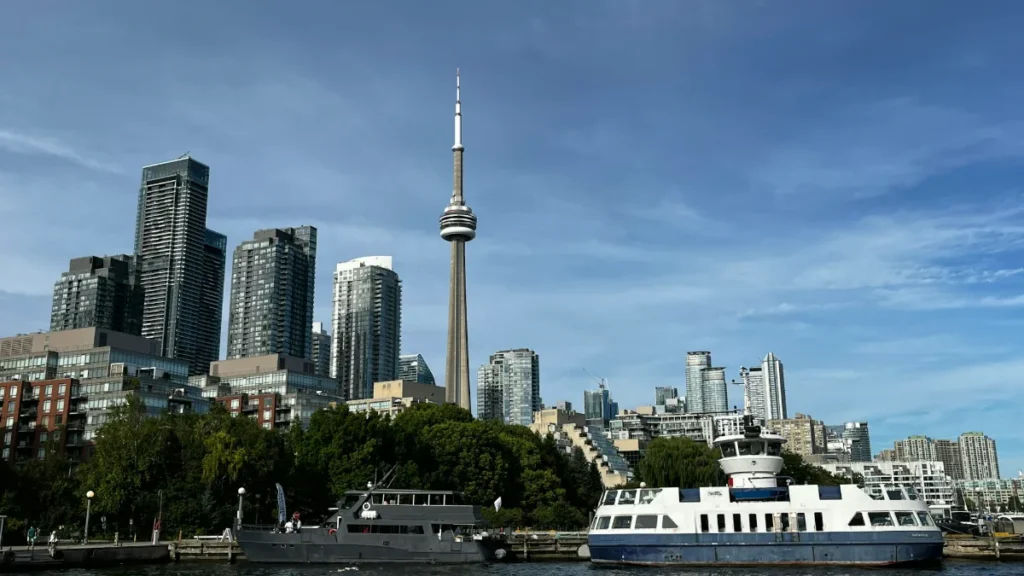
The Jack Layton Ferry Terminal at 9 Queens Quay West is the departure point for the Toronto Islands ferries, and harbour cruises leave from the same stretch. The 509 and 510 streetcars run underground from Union Station to Queens Quay. It is pleasant in summer but can feel windy and quiet in winter.
Liberty Village and King West
Liberty Village is a former industrial area west of Strachan Avenue, now full of condos and restaurants. King West, between Spadina and Strachan, is known for nightlife.
Exhibition GO station on the Lakeshore West line sits on the south side of Liberty Village, next to Exhibition Place, home of BMO Field and the Enercare Centre. The 504 King streetcar connects the area to downtown. Accommodation here is mostly short-term rentals, so check the registration rules below before you book.
Midtown: Yonge and Eglinton
Around Yonge Street and Eglinton Avenue, Midtown is a busy residential and shopping area about 15 to 20 minutes north of downtown by subway. Eglinton station connects Line 1 with Line 5 Eglinton, which opened in February 2026 and runs east-west across the middle of the city.
Room prices are often lower than downtown. It suits travellers who want a calmer base, and drivers, since parking is usually easier than in the core.
Near Pearson Airport
Many hotels sit around Toronto Pearson International Airport, in Mississauga and Etobicoke. They suit late arrivals and early flights, but there is little to see nearby.
If you plan to sightsee, it is usually better to go straight downtown. The UP Express takes about 28 minutes from Terminal 1 to Union Station. Our Pearson Airport to downtown guide compares the train, TTC buses, taxis and ride-hailing.
Hotels versus short-term rentals
Toronto allows short-term rentals (stays of fewer than 28 consecutive days) only in the host’s principal residence. Every legal operator gets a City registration number in the format STR-0000-XXXXXX, and that number must appear on the listing. Some condo buildings also restrict short stays in their own rules.
Before you book, check that the listing shows a registration number and be cautious with entire condo units in towers, since the building may not allow short stays.
Taxes and costs to expect
Room prices in Toronto change a lot with the season, the day of the week and what is on in the city, so we do not list nightly rates. What stays the same is the tax on top of the rate:
- Municipal Accommodation Tax (MAT): 6% on hotels and short-term rentals. A temporary increase to 8.5% ended on August 1, 2026.
- HST: 13% Harmonized Sales Tax, which is also charged on the MAT portion.
- Other charges: some hotels add parking, resort-style or destination fees. Check the final total before you pay.
Summer weekends, long weekends, the Toronto International Film Festival in September and major concert dates tend to be the most expensive. Winter weekdays are often the cheapest.
Accessibility tips
- Not every subway station has an elevator. Check the TTC’s station accessibility information before choosing a hotel near a particular station.
- Older inns and guest houses in the Annex and Old Town may have stairs and no lift. Ask before you book.
- Downtown hotels connected to the PATH let you reach Union Station and some subway stations indoors.
Frequently asked questions
What is the best area to stay in Toronto for first-time visitors?
For most first-time visitors, the downtown core near Union Station is the most practical choice. You can walk to the CN Tower, the waterfront and the Entertainment District, and you have direct access to the subway and the airport train.
Is it better to stay downtown or near the airport?
Stay near the airport only for a very early flight or a late arrival with no plans in the city. For sightseeing, downtown saves you two train trips a day.
Which Toronto neighbourhoods are quieter at night?
Yorkville, the Annex and Midtown are generally calmer than the Entertainment District, King West and Queen West, while still being close to the subway.
Are vacation rentals legal in Toronto?
Yes, but only when the host rents out their principal residence and has registered with the City. A legal listing shows a registration number in the format STR-0000-XXXXXX.
Plan your visit
Start by deciding how many days you have and what you most want to see. For a short first trip, base yourself downtown near Union Station. For a longer stay or a calmer feel, look at Yorkville, the Annex or Old Town, and check that your hotel is within a few minutes’ walk of a subway station. Budget for the 6% MAT and 13% HST on top of the room rate, and compare prices on several dates if you can be flexible.
Not sure how long to stay? Our guide on how many days to spend in Toronto helps you plan a trip from one to five days.