The easiest way to get around Toronto as a visitor is the TTC, the city’s subway, streetcar and bus network. One adult fare costs $3.30 when you tap a credit card, debit card or PRESTO card, and it includes unlimited transfers for two hours. Most downtown sights are also close enough to walk between, so many visitors never need a car.
This guide explains how the TTC works, how to pay, which routes are most useful for visitors, and when walking, cycling, taxis, ferries or regional trains make more sense.
Quick facts
- Main transit system: TTC (Toronto Transit Commission): subway, light rail, streetcars and buses.
- Adult fare: $3.30 with a credit card, debit card or PRESTO card; $3.35 in exact cash.
- Transfers: free for two hours from your first tap when you pay by card or PRESTO; cash fares do not include a transfer.
- Children: 12 and under ride free.
- Day pass: $13.50, sold as a PRESTO Ticket.
- Subway hours: roughly 6 a.m. to 2 a.m. Monday to Saturday and 8 a.m. to 2 a.m. on Sunday.
- Airport link: UP Express train from Pearson to Union Station in about 28 minutes.
- Tickets: Toronto City Tour is an independent guide and does not sell transit, tour or attraction tickets.
How Toronto’s transit system works
The TTC runs almost all public transit inside the City of Toronto. For visitors, three parts matter most: the subway, the streetcars and the buses. Regional services such as GO Transit and the UP Express are run separately by Metrolinx and use their own fares.
The subway and light rail lines
The subway is the fastest way to cover longer distances across the city. The lines are numbered and colour-coded on maps and signs:
- Line 1 Yonge-University: a U-shaped line that runs north from Union Station along both Yonge Street and University Avenue. This is the line most visitors use. It stops near the Eaton Centre, the Royal Ontario Museum (Museum station), the Art Gallery of Ontario (St. Patrick station) and many downtown hotels.
- Line 2 Bloor-Danforth: runs east to west along Bloor Street and Danforth Avenue. It connects with Line 1 at St. George, Bloor-Yonge and Spadina stations and is handy for the Annex, Yorkville, Greektown and High Park.
- Line 4 Sheppard: a short line in North York that runs east from Sheppard-Yonge station. Few visitors need it.
- Line 5 Eglinton: a light rail line that opened in February 2026, running about 19 km across midtown between Mount Dennis and Kennedy. It connects with Line 1 at Eglinton and Cedarvale and with Line 2 at Kennedy.
- Line 6 Finch West: a light rail line in the northwest of the city that opened in December 2025, running from Finch West station on Line 1 to Humber College.
Line 3, the old Scarborough line, no longer runs, and buses serve that part of the city instead.
Streetcars
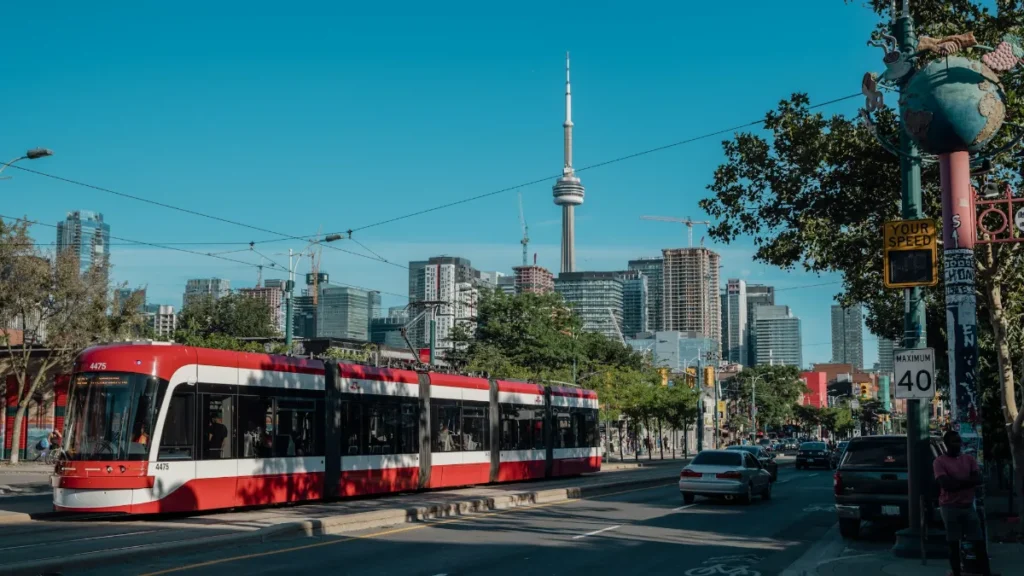
Toronto is one of the few North American cities with a large streetcar network, and the red streetcars are a useful way to travel east to west across downtown. Routes visitors often use include the 501 Queen and 504 King, which cross downtown and pass many shops and restaurants, the 509 Harbourfront along the waterfront, and the 510 Spadina, which runs north from the waterfront past Chinatown and close to Kensington Market. The 509 and 510 start from an underground platform at Union Station.
Streetcar routes are often changed or replaced by buses for track work and events, especially in summer. Check the service advisories on the TTC website before you rely on a specific route.
Buses and night service
Buses fill in the rest of the network and reach places the subway does not. Visitors mostly use them to reach attractions outside the core or to connect from a subway station to their final stop.
When the subway closes, the Blue Night Network takes over. Buses and streetcars on most major routes run from about 1:30 a.m. to 5:30 a.m., every 30 minutes or better. Stops on these routes are marked with a reflective blue band.
How to pay for the TTC
Tap a credit or debit card
For most short-term visitors, the simplest option is to tap a contactless credit card, Interac debit card or phone wallet on the reader when you enter a subway station or board a streetcar or bus. An adult fare is $3.30, and any trips you start within two hours of your first tap are not charged again, as long as you tap the same card or device each time.
Each person aged 13 or older needs to tap their own card or device. If you are travelling as a couple, you cannot both tap the same credit card.
PRESTO card
PRESTO is the reloadable fare card used across the Toronto region. A physical card costs $4 and is sold at fare vending machines in subway stations, at Shoppers Drug Mart stores and online. A free digital PRESTO card can also be added to a phone wallet for riders aged 13 and older. PRESTO gives the same $3.30 adult fare and lower fares for youth (13 to 19) and seniors (65 and over). Since March 2026, the card must hold enough money to cover the full fare before you tap.
Day pass and cash
A PRESTO day pass costs $13.50. It only saves money if you take five or more separate trips in a day, since the two-hour transfer already covers most connections. For more ways to keep costs down, see our Toronto on a budget guide. Cash is accepted at $3.35 for adults, but you need the exact amount, no change is given and cash fares do not include a transfer.
The TTC also caps fares by calendar month on cards and PRESTO, but that only helps people who ride very often in one month, so most visitors will not reach it. Fares change from time to time, so check the TTC website before your trip.
Walking and the PATH
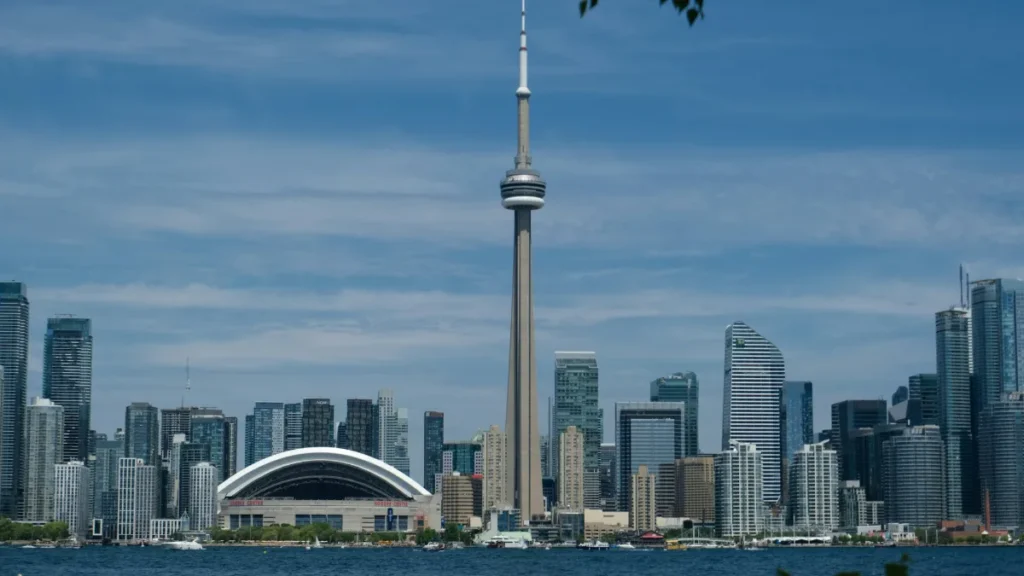
Downtown Toronto is very walkable. The CN Tower, Ripley’s Aquarium, the harbourfront, Union Station and the Financial District are all within a short walk of each other, and St. Lawrence Market and the Distillery District are a reasonable walk east. Walking between nearby sights is often faster than waiting for a connection.
In cold or wet weather, the PATH is a useful option. It is a network of more than 30 km of mostly underground walkways in the Financial District, linking Union Station, six subway stations, Scotiabank Arena, the Eaton Centre, City Hall and more than 75 buildings, with about 1,200 shops, restaurants and services along the way. Directional signs and maps are posted throughout, and a PATH map can be downloaded from the City of Toronto website.
Other ways to get around
Bike Share Toronto
Bike Share Toronto has stations across downtown and many surrounding neighbourhoods, with classic bikes and e-bikes. You can pay per ride or buy a pass through the app or at a station kiosk. Prices and pass types change, so check the Bike Share Toronto app or website for current rates. The Martin Goodman Trail along the waterfront is a pleasant, mostly flat route for visitors.
Taxis and ride-hailing
Licensed taxis and ride-hailing apps operate across the city. They are convenient late at night, with heavy luggage or with small children, but downtown traffic can be slow at rush hour, when the subway is often quicker. Driverless taxis are not available yet; see our guide to Waymo in Toronto for what has been announced.
Ferries to the Toronto Islands
City-run ferries leave from the Jack Layton Ferry Terminal at the foot of Bay Street. An adult round trip costs $9.57. Routes and frequency are reduced outside the warm months, so read our Toronto Islands guide for seasons and tips before you go.
UP Express and GO Transit
The UP Express train links Pearson Airport with Union Station in about 28 minutes, with stops at Weston, Mount Dennis and Bloor. Our guide to getting from Pearson Airport to downtown Toronto compares the train, TTC buses and taxis. GO Transit trains and buses, also based at Union Station, connect Toronto with surrounding cities and run to Niagara Falls. GO uses its own fares, which you can pay with PRESTO or a credit card.
Driving
A car is rarely needed inside the city. Downtown traffic is often heavy and parking is costly in many areas. If you do drive, municipal Green P lots and garages are common. A car becomes more useful for day trips to places that transit serves less well.
Getting to the main sights
- CN Tower and Ripley’s Aquarium: walk about 10 minutes from Union Station via the SkyWalk. See our CN Tower guide.
- Royal Ontario Museum: Line 1 to Museum station, or Line 2 to St. George.
- Art Gallery of Ontario: Line 1 to St. Patrick, then a short walk west along Dundas Street.
- St. Lawrence Market: walk east from Union Station, or ride Line 1 to King station.
- Casa Loma: Line 1 to Dupont station, then a short uphill walk.
- Kensington Market: the 510 Spadina streetcar, or a walk from the AGO.
- Distillery District: streetcar service along King Street East, or about a 20-minute walk from St. Lawrence Market.
Practical tips
- Tap the same card every time. The free two-hour transfer only works if you use the same card or phone for each tap. Switching between a physical card and the same card in your phone wallet can count as two different payment methods.
- Avoid rush hour with luggage. Subways and streetcars are busiest on weekday mornings and late afternoons.
- Check weekend closures. Parts of the subway sometimes close on weekends for maintenance, with shuttle buses running instead. The TTC website lists planned closures.
- Use a transit app. Phone map apps show real-time TTC arrivals and route suggestions.
- Stand right, walk left. On escalators, riders who are standing keep to the right.
- Plan accessible trips ahead. Many stations have elevators, but not all, and elevators are sometimes out of service. The TTC website lists accessible stations and current elevator status.
Frequently asked questions
Can I use my credit card on the TTC?
Yes. You can tap a contactless credit card, Interac debit card or phone wallet on subway gates and on streetcar and bus readers. Adults pay $3.30, the same as with PRESTO, and transfers within two hours are free.
Do I need a PRESTO card as a visitor?
Not usually. Tapping a credit or debit card gives adults the same fare. A PRESTO card mainly helps youth and seniors, who get lower fares on PRESTO, and anyone planning to buy a day pass.
Is the TTC free for children?
Yes. Children 12 and under ride free on the TTC.
Is Toronto easy to get around without a car?
Yes. The subway, streetcars and walking cover nearly all the main sights, and the UP Express connects Pearson Airport with downtown. A car is mainly useful for day trips.
Does the TTC run all night?
The subway does not, but the Blue Night Network of buses and streetcars runs on most major routes from about 1:30 a.m. to 5:30 a.m.
Plan your visit
For most trips, a contactless card in your pocket, comfortable walking shoes and a phone map app are all you need to get around Toronto. Stay near a Line 1 station or the waterfront to keep travel times short, walk between nearby downtown sights, and use the subway and streetcars for everything else. If you are still deciding how long to stay, our guide to how many days to spend in Toronto can help.
Fares, routes and schedules change, so check the TTC, UP Express and GO Transit websites shortly before you travel. Toronto City Tour is an independent travel guide; we do not sell transit passes, tickets or tours.